
Why Central Florida Water Is So Hard on Your Plumbing (and What to Do About It)
White crust around the faucet shortly after you’ve cleaned it. Soap that won't lather no matter how much you use. A water heater that gave up years before it should have. Sounds familiar?
If you've lived in Ocala, The Villages, Belleview, or anywhere across the Heart of Florida for more than a season, you already know the water here leaves something behind. What most homeowners don't know is what that something is, where it comes from, or how much of it is worth doing anything about.
You’ve probably heard of Florida’ hard water. But what does it really mean? Is a treatment failure or a sign that something's wrong with your utility?
In this article, we dive into what’s actually happening, how it can affect your plumbing, and what’s genuinely worth doing about it.
What Is Hard Water, Exactly?
Hard water is water carrying dissolved minerals (mostly calcium and magnesium) picked up on its way to your tap.
The U.S. Geological Survey measures hardness as calcium carbonate in milligrams per liter (mg/L) and sorts it into four bands:
- Soft Water: 0 to 60 mg/L
- Moderately Hard Water: 61 to 120 mg/L
- Hard Water: 121 to 180 mg/L
- Very Hard Water: More than 180 mg/L
But before we dive into more details, a quick word on units, as this is where it usually gets confusing. Alongside the milligrams per liter we've been using, you'll run into parts per million (ppm) and grains per gallon (gpg). Your utility report will most likely use mg/L or ppm, while water treatment companies tend to work in grains. Here's a simple table so you can see where your water sits:
| Water Hardness | Milligrams per liter (mg/L) | Parts per million (ppm) | Grain per gallon (gpg) |
|---|---|---|---|
| Soft Water | 0 to 60 mg/L | 0 to 60 ppm | 0 to 3.5 gpg |
| Moderately Hard Water | 61 to 120 mg/L | 61 to 120 ppm | 3.6 to 7.0 gpg |
| Hard Water | 121 to 180 mg/L | 121 to 180 ppm | 7.1 to 10.5 gpg |
| Very Hard Water | More than 180 mg/L | More than 180 ppm | More than 10.5 gpg |
And no, that third column isn't a typo.
For water, milligrams per liter and parts per million measure the same thing.
Believe It or Not, Your Soap Knows Before You Do
USGS defines hardness by what's dissolved in the water: calcium and magnesium. But the way you actually notice it is soap.
In hard water, soap reacts with the calcium to form soap scum, and it takes a lot more soap or detergent to get anything clean, your hands, your hair, or even your laundry. That's why the first sign most people notice isn't in their pipes at all. It's in the shower.
Does It Make Your Water Taste Bad?
Not really! Hardness is fairly neutral in taste. Bad taste or smell usually points to something else. The most common culprit around here is sulfur in well water, which people often describe as a rotten egg smell. In city water, it's more likely chlorine, which utilities add to keep the water safe to drink.
Why Central Florida Water Is So Hard
Look down. The answer is under your feet, and it's named after Ocala.
Nearly all the drinking water across Marion, Sumter, Lake, Citrus, and Hernando counties comes from The Floridan Aquifer. That aquifer sits in carbonate rock, limestone and dolostone made almost entirely of calcite, which is calcium carbonate. The dominant rock layer in the Upper Floridan aquifer is called the Ocala Limestone. The formation that makes your water hard is literally named after the city at the center of our service area.
By the time that water reaches the well field, the treatment plant, and eventually your kitchen faucet or your shower head, it's carrying a mineral load it picked up over thousands of years underground.
USGS survey work on hardness in the Floridan aquifer, conducted by the University of South Florida in 1965 and revised in 1975, found hardness running below 180 mg/L across northwestern Florida and much of the center of the state, while the rest of Florida runs higher in places as high as 1,900 mg/L. Central Florida generally sits in that lower band, but still falls into the ‘hard’ category, and in some spots at the very edge of the ‘very hard’ one.
As rainwater filters down through that rock, slightly acidic, it dissolves calcium and magnesium and carries them along. By the time the water reaches a well field and then your kitchen faucet, it's carrying a mineral load it picked up underground over geologic time.
How Hard is Florida’s Water in Reality, Then?
A Florida Department of Environmental Protection training document, prepared for the state's Watershed Monitoring Section, lists the calcium and magnesium levels typical of Floridan aquifer water. Do the standard conversion and it comes out to roughly 190 mg/L.
Now, that puts us in the "very hard" range on the USGS scale. Though it's worth noting FDEP's own document uses different thresholds, and by those, the same water is just "hard." Definitions vary, as the document itself points out. So take the label with a grain of salt, especially when someone selling you something picks the scarier one.
In simple words, Central Florida doesn't have the hardest water in America. Parts of the country run far higher. What we have is consistently mineral-heavy water, everywhere, all the time. That consistency is what does the damage. It isn't one bad year. It's every glass, every shower, every load of laundry, for as long as you own the house.
How Do I Find My Actual Number?
If you're on City of Ocala water, it's already been softened. The city draws from six Upper Floridan wells and softens the water at its treatment plant before it goes out to homes. That's confirmed in the
2025 Annual Drinking Water Quality Report for a system that resells City of Ocala water, and the city's own plant staff have said publicly that they soften specifically because calcium and magnesium would otherwise clog customers' pipes with lime scale. Ocala has also won the regional best-tasting drinking water award from the American Water Works Association's Florida Section.
If you're on Marion County Utilities, it probably hasn't been. MCU publishes separate annual water quality reports for each system it operates. We read through several. The Eastside Consolidated system, serving customers from 24 interconnected wells and 10 treatment facilities, describes its treatment as chlorination for disinfection, aeration and filtration for sediment, and a corrosion-inhibiting additive. Pine Ridge Estates, running on two wells, lists chlorination and nothing else. Neither softens.
If you're on a private well, which is fairly common around Dunnellon, rural Marion, and much of Citrus and Hernando, nothing has been done to your water at all. You're getting the aquifer as it comes, potentially with iron and sulfur alongside the hardness.
So a homeowner in downtown Ocala and a homeowner ten minutes out on a county system are having genuinely different experiences with the same underlying aquifer. This factor changes what you should do about it.
How Do I Find My Actual Number?
Two pieces of common advice won't get you there. The first is to check your utility's annual water quality report. Useful documents, but hardness usually isn't in them because it isn't a federally regulated contaminant, so utilities aren't required to list it, and most around here don't.
The second is a hardness map by zip code. Be careful with those. Hardness follows the aquifer and the well field, not postal boundaries, and USGS says its own national map isn't meant for decisions about a single property. Three things that do work:
- Call your utility. Ask for finished-water hardness, that's the treated number, the one in your pipes.
- Test it yourself. A strip from the hardware store puts you in the right range in five minutes. A mail-in kit gets you an exact figure.
- Check regional data. The St. Johns River Water Management District publishes groundwater readings from hundreds of monitoring stations. Not your house, but your area — and unlike the zip code maps, it's real.
Do I need a water softener?
It depends on several factors, including your water, your home, and honestly, on how much it bothers you.
If you're on an untreated well, it's worth serious consideration. On city water, it's less clear-cut, since some systems soften before the water reaches you and others don't. Start by finding out what's actually coming out of your tap.
From there, it comes down to what you're experiencing. Constant scale on fixtures, a water heater that keeps needing attention, skin or hair that never feels quite right after a shower.
One thing worth knowing before you commit: softening too aggressively has trade-offs of its own, so a system should be sized for your actual water rather than installed by default.
Hard Water Isn't a Health Problem. It's a Plumbing Problem
Florida water gets a lot of bad press, and two different things keep getting tangled together.
On health, USGS is clear: hardness is "not a health concern, but it can be a nuisance." The calcium and magnesium are the same minerals you get from food.
You may also have seen coverage of Florida's polluted waterways,
more than half of the state's assessed water bodies are failing water quality standards. That's real, and it's serious. But it's about lakes and rivers. Your tap water comes from underground, and it's treated and tested before it reaches you. Anyone selling you a softener off a lake pollution headline is connecting two things that aren't connected.
So why care? Because your plumbing doesn't drink the water. It has to carry it, heat it, and push it through small openings, every day, for decades.
What Hard Water Actually Does
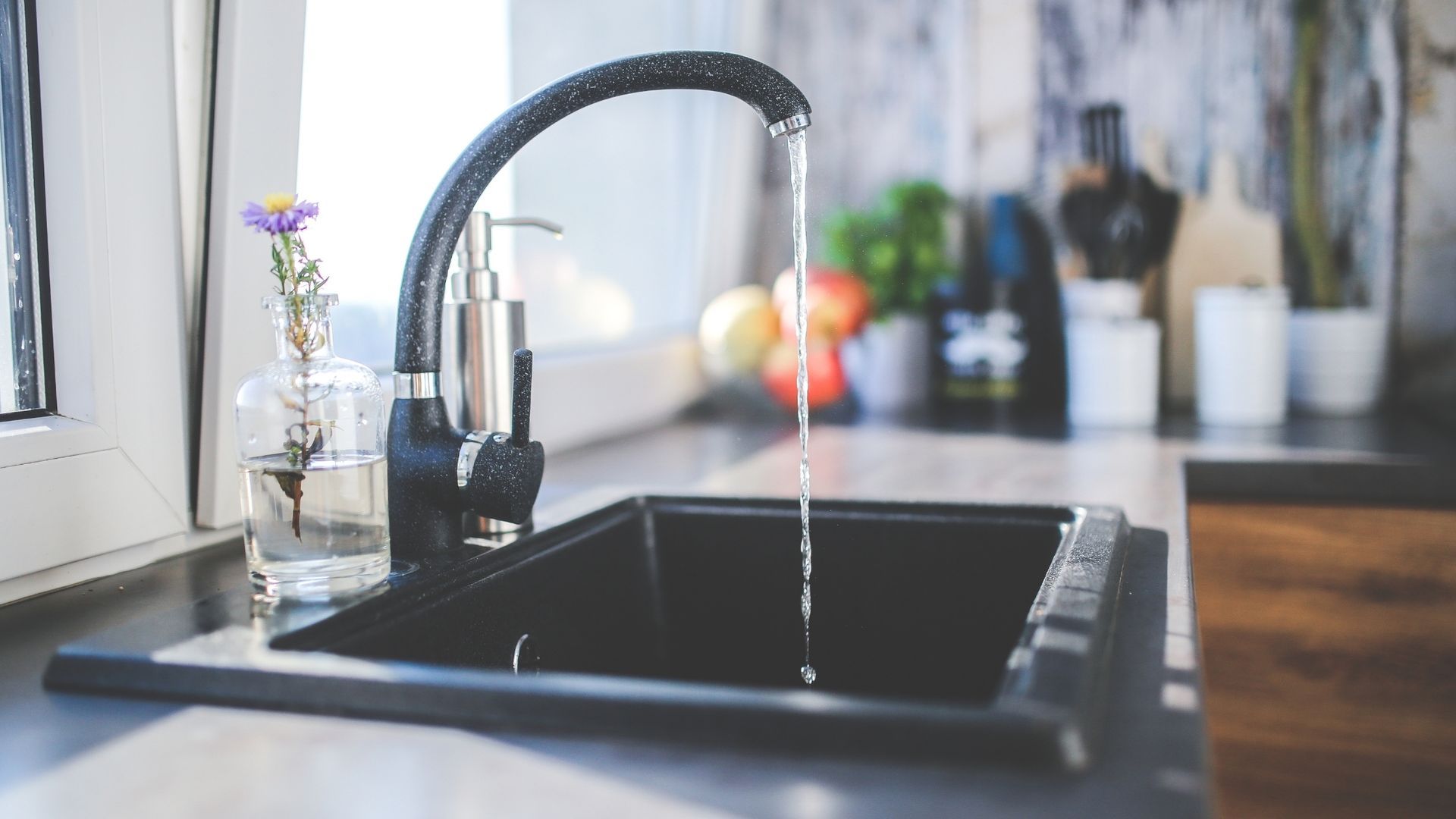
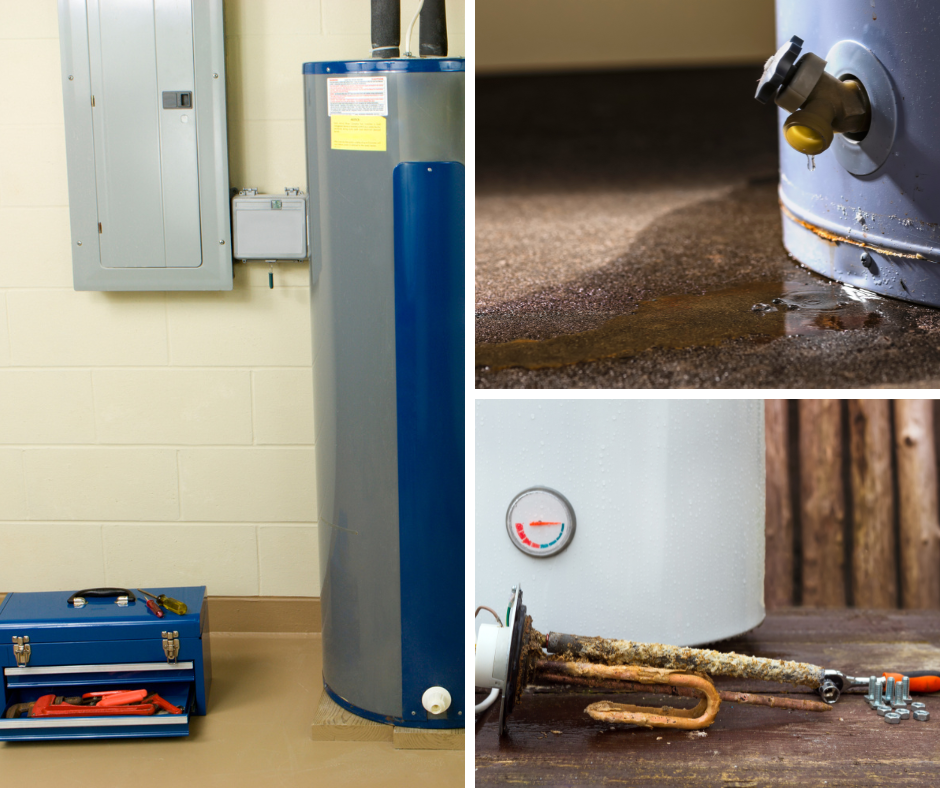
Your water heater takes the worst of it.
Heat the water and the minerals come out of solution as scale, a chalky crust on tank walls, heating elements, and burners. USGS lists what that costs you: shorter equipment life, higher heating bills, clogged pipes.
A
U.S. Department of Energy report puts numbers on it. Tankless gas heaters running on hard water dropped from 80% efficiency to 72%, then quit entirely when scale clogged a control device.
Fixtures clog from the inside
USGS puts it well: scale narrows a pipe much the way cholesterol narrows an artery. That's your guest shower spraying sideways, your kitchen faucet slowing to a trickle, your toilet running long. What looks like a whole-house pressure problem is often just a few clogged fixtures.
Your Fixtures Wear Out Faster
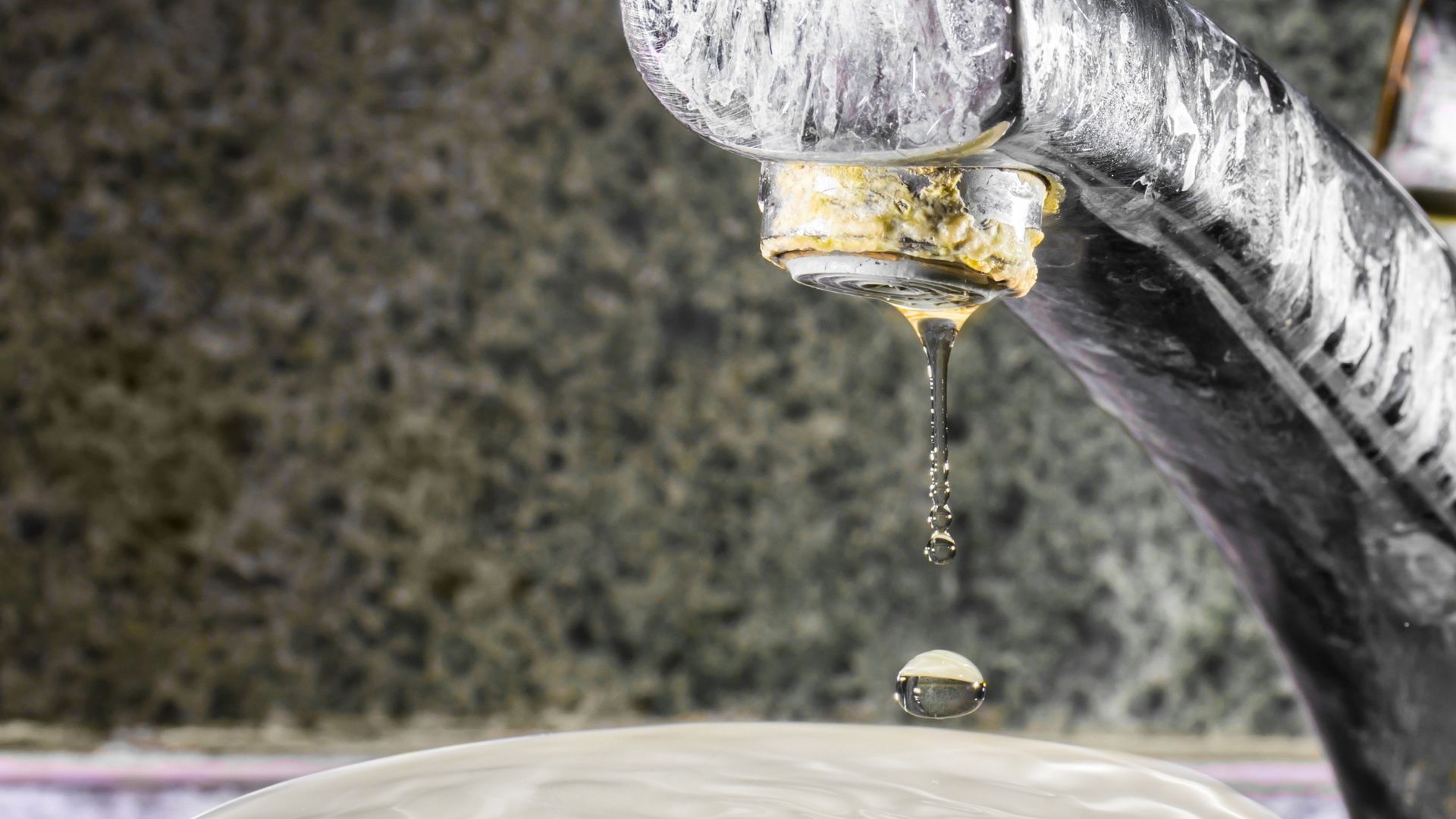
Scale is the obvious one. This is the white, chalky crust around faucets and showerheads. But it's not the only thing your fixtures are dealing with.
If you're seeing rusty orange or brown streaking instead, that's iron, not hardness. It's a different mineral entirely and very common in wells around here. Worth knowing the difference, because a standard water softener isn't built to handle iron. In that case, you’ll need proper filtration systems.
Either way, the finish pays for it. Deposits build up, and then the harsh cleaners people reach for to scrub them off do their own damage. Between the two, chrome and brushed finishes pit and dull years before they should.
Soap stops working
You know this one from the shower. It's also the spots on your glassware, the film on the shower door, and laundry that stiffens over time. That film isn't dirt, it's soap and minerals bonded together.
What it doesn't do
Scale narrows and insulates. It doesn't corrode. Pinhole leaks, discolored water, and failing joints are almost always about pipe age and material, usually old cast iron drains or the polybutylene supply lines in homes built between the late '70s and mid-'90s.
That distinction matters, because the fixes are nothing alike. A softener won't save failing polybutylene, and repiping won't stop scale in your water heater.
What's To Do About Hard Water in Central Florida
- Find out what you have: Given that Ocala softens and the county mostly doesn't, this really is step one. Buying a softener for already-softened water is money spent on nothing.
- Turn the water heater down: Above 120°F you're making scale faster to get hot water you probably don't need.
- Flush the water heater: DOE found regular flushing preserves efficiency for the life of an electric tank and slows the decline in gas units. Highest-return maintenance there is around here, and most homes have never had it done. We recommend doing this annually in Central Florida.
- Soak your fixtures: Aerators and showerheads that seem dead are usually just packed with scale.
- Consider a softener, but carefully: On untreated well water it protects your heater, fixtures, and appliances at once. But here's what the softener industry doesn't advertise: that same DOE report warns that in extremely soft water, "tank lifetimes can be reduced by 50 percent or more." Over-softening trades one problem for another.
- Filter at the tap for taste: If the complaint is flavor rather than scale, a softener is the wrong tool. Taste usually comes down to sulfur or chlorine, and a kitchen filter is cheaper.
When to Call Someone
Call a certified technician if you're seeing:
- Popping or rumbling from the water heater. That's usually sediment on the bottom of the tank
- Hot water running out faster than it used to
- Low pressure at several fixtures at once
- A water heater past 10 years old that's never been flushed
- Discolored water or signs of a leak. This is actually a pipe problem, not a hardness problem
- Fixtures that look discolored or worn down, especially if scrubbing isn't fixing it
We're a family-owned
plumbing and HVAC-R company based in Belleview, serving Marion, Sumter, Lake, Citrus, and Hernando counties. We'll flush and inspect your water heater, check your pressure, and tell you honestly whether you're dealing with hardness, aging pipes, or something else.
You might also like
Blog